
Soil first. Then the crop. Then the bag
- Soil · what it holdsEvery soil has a pH, a level of organic matter and a supply of nutrients that it still holds.
- Crop · what it takesEvery harvested crop takes nutrients out of the soil.
- Product · what we put backWe put nutrients back with a product made for the crop and the soil it grows in.
Our plant site in Lahore can make about 50,000 tonnes of product a year. We have 23 registered brands of our own. We hold 34 licences from the Pakistan Standards and Quality Control Authority (PSQCA). Of these licences, 22 are on our own brands and 12 are on registered formulations that any partner company can take and sell under its own brand. Our laboratory is accredited by the Pakistan National Accreditation Council (PNAC). The capacity, brand and licence figures are as of July 2026.
I grow
We publish 28 crop plans. Each plan gives the amount to apply per acre at every crop stage. The dates of the stages are set from your sowing date. 24 of the plans also have the Nutrition creator. The Nutrition creator adjusts the amounts to your soil.
I sell
As a dealer, you can stock all 23 of our brands. We supply the brands to you directly. We test every batch before it ships. On our website, a farmer can open the lab report for any bag by typing the batch number printed on it.
Made under my name
At our plant in Lahore we already make products sold under more than 100 brands owned by 14 partner companies. We can make a product for your brand in the same way, from the formulation to the finished bag. Under toll manufacturing, you supply the formulation.
I want figures for my field, or a new product
Our free tools for growers are called Vitalytics. In Vitalytics, you enter your crop, acreage, sowing date or soil test reading. The tools then work out fertiliser quantities, water needs and other figures for your own field. We also develop new products with companies that want a product that is not yet on the market.
Find the plan for your crop
Most samples in the Punjab soil testing programme were alkaline. Of the 770,160 samples tested in about 2016 to 2018, 69.1% had a pH above 8. Each of our crop plans is written for alkaline, calcareous soil.
Launch it under your name
We formulate, manufacture, register and test crop nutrition products that partner companies sell. Most of these products carry the partner company’s own brand name. You market and sell the product. We take the product from formulation to the finished bag. Under toll manufacturing, we make the product to a formulation that you supply.
partner brands registered with VAN as the manufacturer
We make the first commercial batch within 60 days for a library formulation that already holds a PSQCA licence, and in about 3 months for one marked Validated.
Pakistan applies more fertiliser per acre of cropland than the world average. Only part of the nutrient applied reaches the crop
Pakistan applied 63 kg of fertiliser nutrients to each acre of its cropland in the calendar year 2023, against a world average of 47 kg per acre. The fertiliser nutrients counted are nitrogen, phosphate as P₂O₅ and potash as K₂O, added together. We converted FAO’s figures from per hectare to per acre.
Pakistan applied 83 tonnes of nitrogen (N) in 2023 for every tonne of potash (K₂O).
Between the fiscal years 1999-2000 and 2023-24, the change in the wheat yield for each kg of fertiliser nutrient was −22%. Each fiscal year runs from July to June. The wheat yield for each kg of fertiliser nutrient is the wheat yield per acre divided by the fertiliser nutrient applied per acre of arable land. The fertiliser nutrient applied per acre of arable land covers all crops, not only wheat. We calculated the measure from published figures.
Pakistan’s nitrogen use efficiency (NUE) was 29.1% in 2023 (an FAO estimate). The 29.1% means that Pakistan’s harvested crops contained about 29 kg of nitrogen for every 100 kg of nitrogen added to cropland in 2023. The 100 kg counts nitrogen from all sources, including fertiliser and manure. In 2023, NUE in the United States was about 71% (an FAO estimate).
Sources: Our World in Data / FAO; FAOSTAT, including the Cropland Nutrient Balance (December 2025 release); World Bank indicator AG.CON.FERT.ZS; the Pakistan Economic Survey. FAO’s figures for fertiliser use in 2023 are 156 kg per hectare for Pakistan and 117 kg per hectare for the world. We divided these figures by 2.471 to give kg per acre. The soil data cover 770,160 samples from 36 districts of Punjab, tested in about 2016 to 2018. The soil data are on the soil page.
3 nutrient problems in Pakistan’s fields
Nitrogen is lost to the air as ammonia and lost to water as nitrate. Phosphate is bound by calcium in the soil. Too little potash is applied. Crops therefore take potassium from what the soil already holds. We make a product for each of these 3 problems.
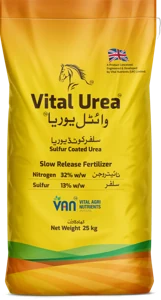
In soil with a pH above 8, part of the nitrogen from urea left on the soil surface is lost to the air as ammonia before the crop can use it. Irrigation water also carries nitrate down below the roots. The nitrogen in that nitrate is lost to water.
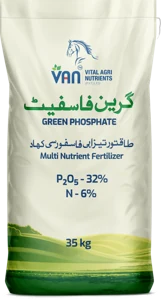
In calcareous soil, free calcium binds most of the applied phosphate before the root reaches it.
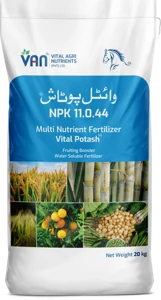
In 2023, Pakistan applied 83 kg of nitrogen (N) for every 1 kg of potash (K₂O). With so little potash applied, crops take most of their potassium from what the soil already holds.
How a product is developed, made, tested and traced, in 6 steps
Each product goes through 6 steps before it reaches a dealer, from trials on our research farms to the lab report for each batch. The batch number printed on each bag links the bag to the record of the day the batch was made. Typing the batch number on our website opens the lab report on which the batch was approved for dispatch. Tap a step to see what happens at that step.
Research farm
We opened our first research farm in 2009, 1 year before the company was incorporated. Trials have run on our research farms every season since then. In 2026, the trials cover 17 years.
We base every formulation on 17 years of trial results and on the 770,160 samples of the Punjab soil testing programme, tested in about 2016 to 2018.
Find your nearest dealer
Type your district. We will then send you the name and phone number of the nearest dealer who stocks our brands.
Order direct from the plant
Tell us the product, the pack size, the quantity and your district. We reply with price, availability and delivery.
- 1Pick the product and the pack size
- 2Send the quantity and your district on WhatsApp
- 3We confirm price, availability and delivery
Or write to info@van.com.pk
Our brands, by application method
Choose how you apply fertiliser to see our brands made for that method.
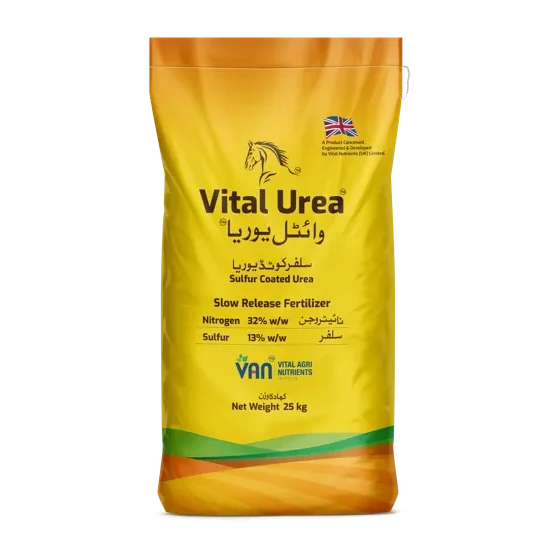
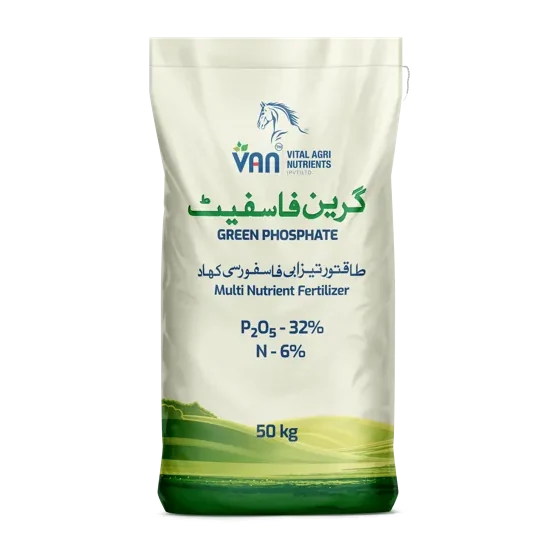
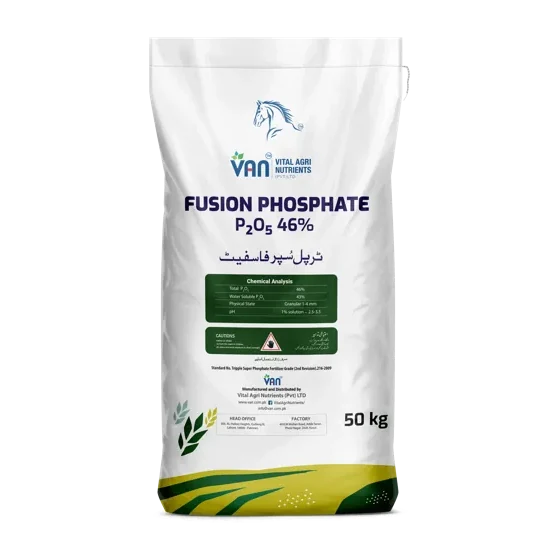
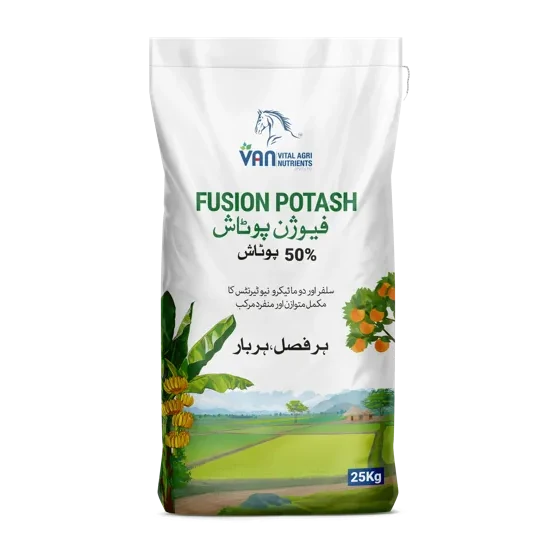
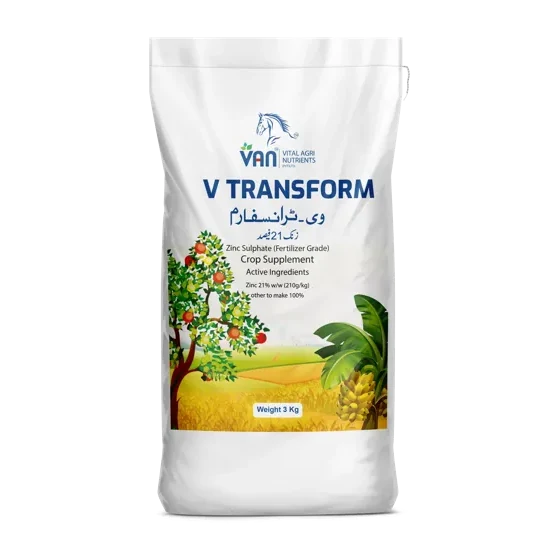
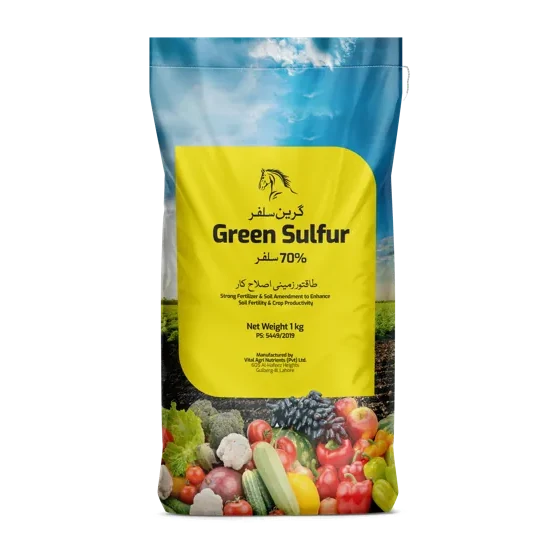
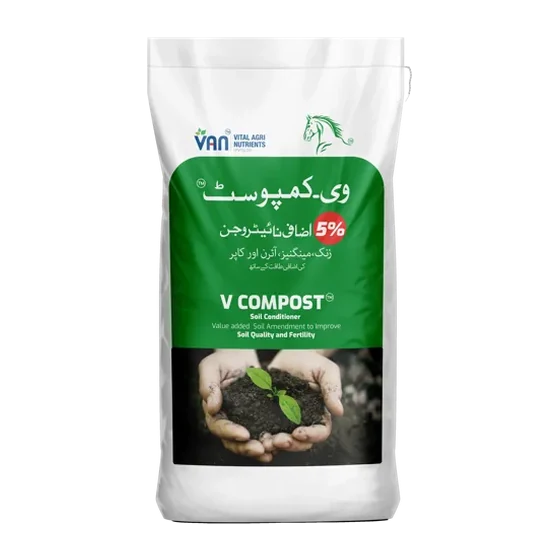
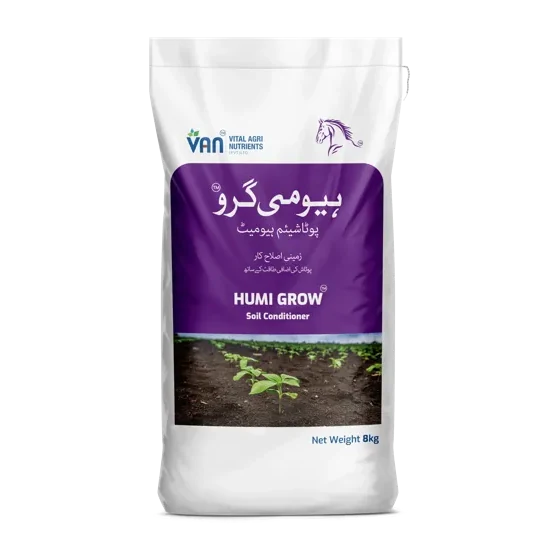
▸ Swipe to see more brands. Tap a pack to open its page.
The farm discipline simulator, the product decks and potassium recovered from ash
How farm practices affect the yield of wheat and potato
Yield depends on doing every farm practice on time: sowing date, seed and plant population, fertiliser at the right stage, irrigation on schedule, and control of weeds, pests and disease. Crop nutrition is 1 of these practices. A practice missed at its time can cost yield that extra work later may not recover. Our farm discipline simulator shows how each practice, and its timing, changes the yield. The simulator scores practices such as sowing date, irrigation and plant population. It then gives an estimated yield. It also shows which practices cost the most yield.
Wheat and potato have working simulators. Each of the 2 simulators scores its own 10 practices. Simulators for the other 26 crop plans are planned.
Open the simulator →Product knowledgeA dealer deck for each of our 23 brands
Each deck is written for a dealer who has to explain the product to a grower. It covers the composition, where the product fits in the season and what the product will not do.
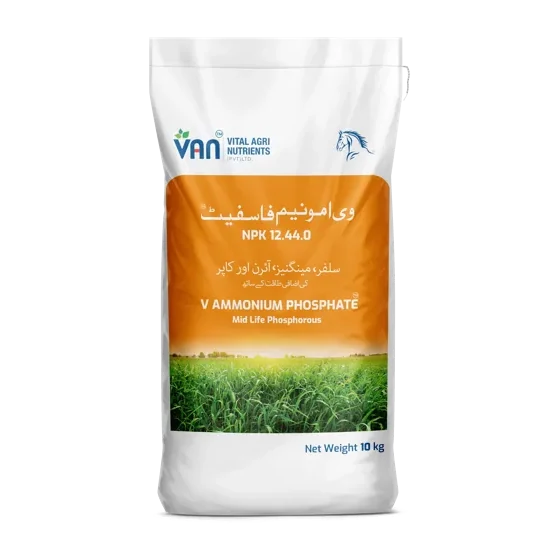
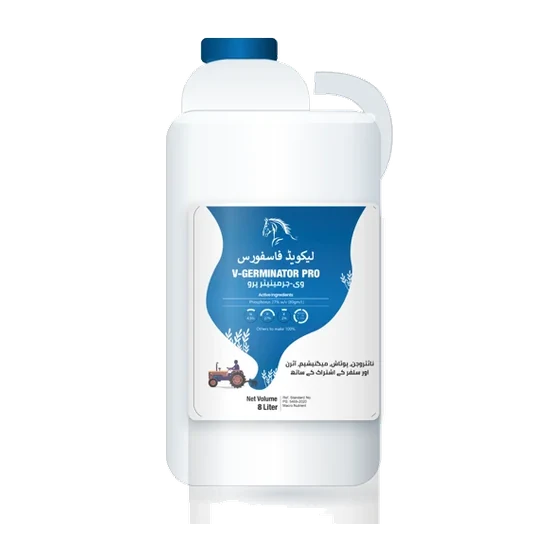 +18 more
Recovering potassium from crop residue ash
The ash of burnt crop residue contains potassium that the crop took up from the soil.
We recover potassium from crop residue ash. We use the recovered potassium in place of imported potash. Recovery of silicon from the same ash is still in research and development.
The circular economy page →