
Crop Plans / Orchards and fruit / Banana, 2nd year
Crop plan · per acreBanana, 2nd year
The full plan is below and in the PDF. For each product, the plan gives the rate, the crop stage at which the product is applied, the application method and the pack size.
When did your season start?
You can skip this question. If you enter your season start date, the page counts the days since that date and calculates the crop’s water use from the same date. The date does not change the rates, quantities or methods in the plan.
The banana plan by nutrient group and crop stage
Rates are per acre. Each rate names the size of its bag or pack, in kg or litres: “½ of a 25 kg bag” is 12.5 kg. Products named in grey are commodity inputs that VAN does not make.
| Nutrient group | Land Preparation | Germination | Early Growth | Grand Growth | Maturity |
|---|---|---|---|---|---|
| Phosphorus | 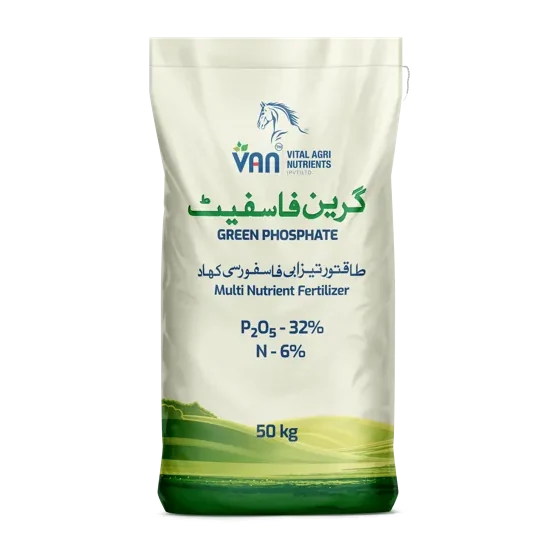 | | 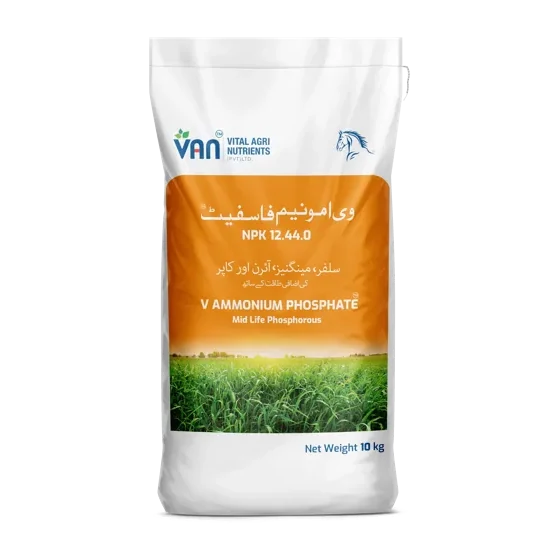 | | |
| Nitrogen | 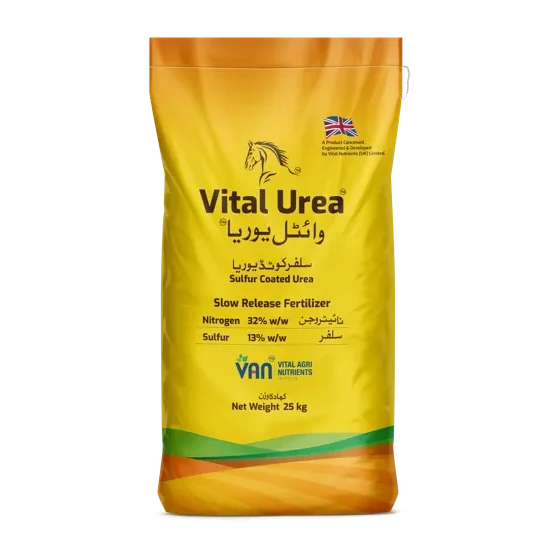 Urea N 46% · ½ of a 50 kg bag Side dressing/Broadcasting | Urea N 46% · ½ of a 50 kg bag Fertigation | Urea N 46% · ½ of a 50 kg bag Side dressing/Broadcasting | Urea N 46% · ½ of a 50 kg bag Side dressing/Broadcasting | |
| Potash | 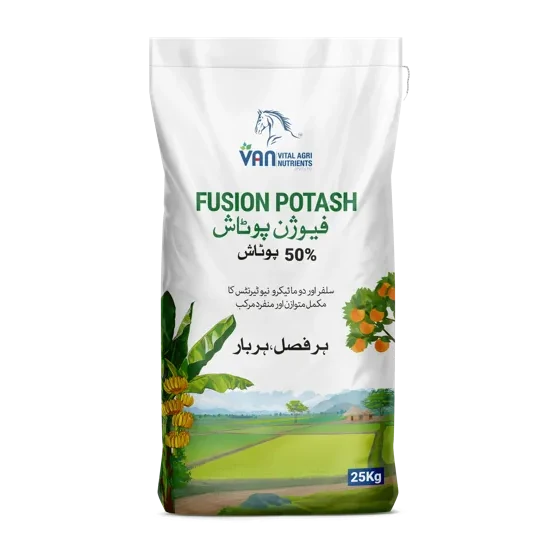 | | 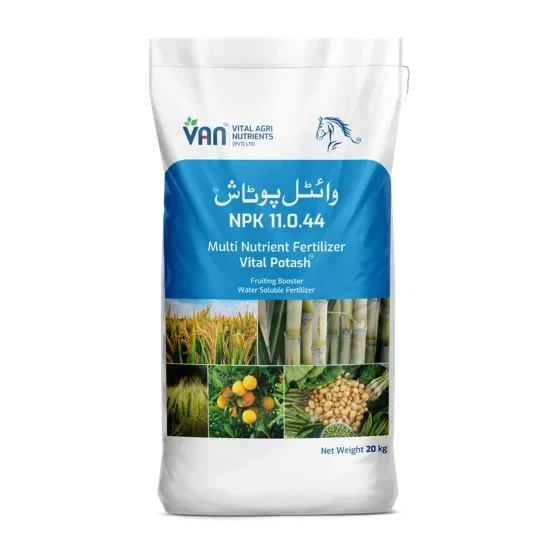 | | |
| Secondary Nutrient | 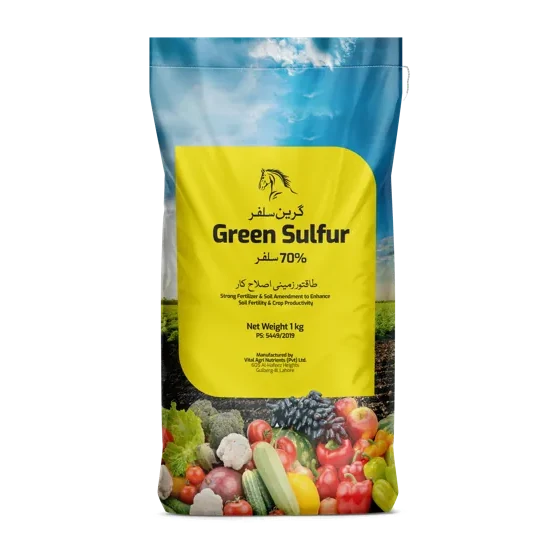 | 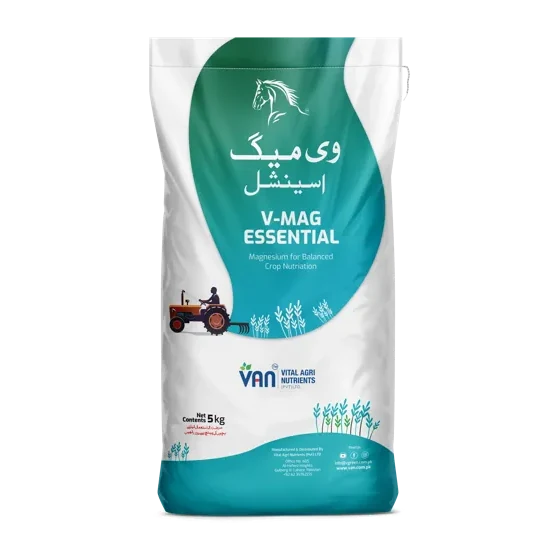 | | | |
| Soil Amendment | 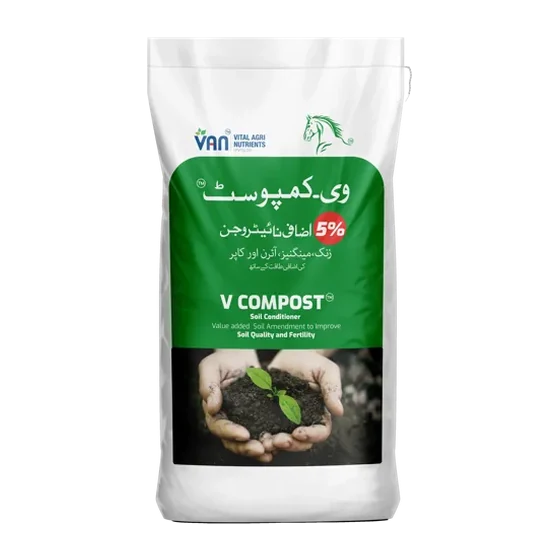 | 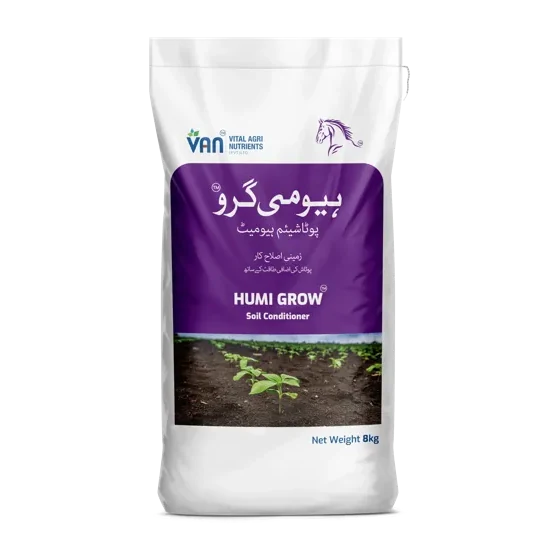 | |||
| Micronutrients | 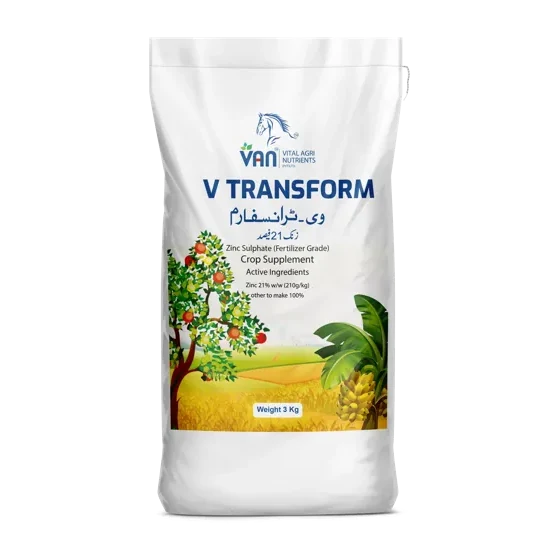 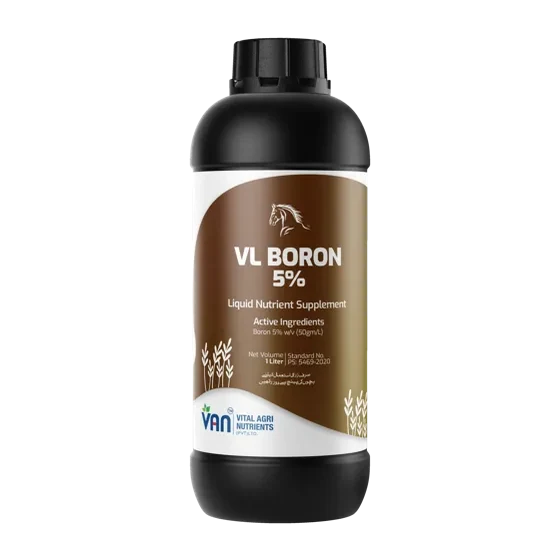 | |
What to buy for your acres
Tick the crop stages at which you plan to apply fertiliser and enter the number of acres. The list below then shows how many bags and packs you need to follow the banana plan on those acres.
Bags and packs for the stages and acres you choose
For each product, the number of bags or packs shown is VAN’s published rate per acre, added up for the stages you tick and multiplied by the number of acres you enter.
This soil adjustment is a pilot. For each reading below, type the number from your soil report or choose its level. If a reading is below Healthy, the plan adds more of the product that supplies that nutrient. The lower the level, the larger the addition, up to 1/2 of the standard rate at Critical. If the phosphorus, potash or zinc reading is Healthy, the plan cuts the rate of the product that supplies that nutrient by 1/4. A high pH reading also adds phosphate and zinc and moves part of the urea to Vital Urea; a high EC reading shows a salinity warning instead. The organic matter reading adds Humi Grow. The soil adjustment never reduces the nitrogen rate. Leave a reading blank if your report does not give it.
Levels, from lowest to highest: Critical, Weak, Average, Moderate, Healthy.
- Green Phosphate50 kg bag · Land Preparation · Germination1¼bags · 62.5 kg
- V-Phosphate10 kg bag · Early Growth · Grand Growth2bags · 20 kg
- Vital Urea25 kg bag · Land Preparation · Early Growth2bags · 50 kg
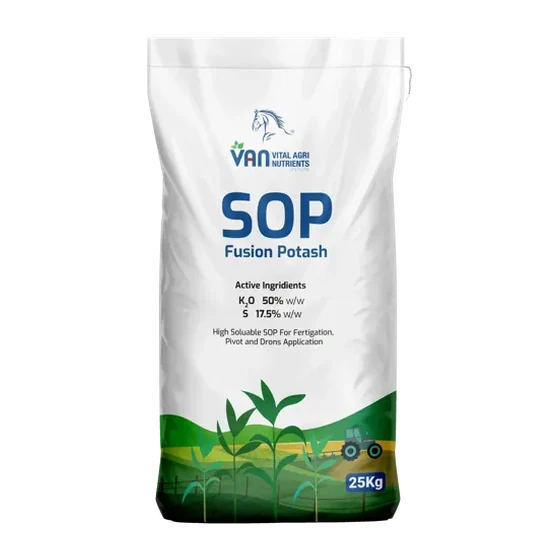
- Fusion Potash25 kg bag · Land Preparation · Germination2bags · 50 kg
- Vital Potash20 kg bag · Grand Growth · Maturity2bags · 40 kg
- Green Sulfur1 kg pack · Land Preparation · Grand Growth6¼packs · 6.25 kg
- V-Mag Essential5 kg bag · Germination · Maturity2bags · 10 kg
- V-Compost20 kg bag · Land Preparation1bag · 20 kg
- Humi Grow8 kg bag · Early Growth1bag · 8 kg
- V-Transform3 kg bag · Germination · Grand Growth4bags · 12 kg
- VL-Boron1 L pack · Germination · Grand Growth3packs · 3 L
- Urea not made by VAN50 kg bag · Land Preparation · Germination · Early Growth · Grand Growth2bags · 100 kg
The WhatsApp message contains the bags and packs in the list above. Add your district to the WhatsApp message, and VAN will reply with the price, availability and your nearest dealer.
The list above can be adjusted to your soil test
Enter your soil test readings in the soil panel of the list above. If you have no soil test, choose your district. The readings are then filled in with that district’s median values from the 770,160 samples of the Punjab soil testing programme, taken about 2016 to 2018. The quantities then change to match those readings. On banana, the list uses 7 readings: Phosphorus (P₂O₅), Potash (K₂O), Zinc, Boron, Organic matter, pH, EC (salinity).
Not used on this crop: iron, copper, manganese. The soil adjustment for banana does not change the list for these readings.
Nutrients applied per acre by the banana plan
These totals are per acre, for the whole plan. Each figure is the published rate multiplied by the product’s nutrient analysis.
No figure for the nutrients taken out in the harvested banana is available that can be compared with this plan. The figures found for the nutrients taken out in harvested banana are either per whole bunch, from intensive cultivation in (A Territory Excluded per Passport Directive), or per hectare at stated yields, from India. Neither gives a figure per tonne of fruit that can be compared with this plan.
Water use of the banana crop in a normal season, and the part irrigation must supply
A nutrition plan gives its full result only if the crop gets the water it needs. For your district, the figures below estimate the crop’s water use over the season, the normal rainfall over the same period, and the part of the crop’s water use that normal rainfall does not cover, which must come from irrigation. The water you pump will be more than the irrigation figure, because some water is lost from the watercourse and some drains below the roots; see the limits below.
You have not entered a season start date at the top of the page, so the water figures are calculated from mid-May, the start of VAN’s published season window for banana. To calculate them from your own season start date, enter it at the top of the page.
Choose your district to see the figures. They are calculated from the normals (the average weather for each month over 30 years) of the nearest weather station that publishes them. The page names the station and its distance from your district.
- The estimate does not use the standard equation of the Food and Agriculture Organization (FAO). That equation needs humidity, wind and solar radiation, but the Pakistan Meteorological Department normals used here give only temperature and rainfall. The water use of a reference crop is therefore calculated with the Hargreaves method, which FAO gives for use when only temperature data are available.
- The estimate is probably low for Punjab. FAO’s crop coefficients, the factors that turn the reference water use into a crop’s water use, are published for a sub-humid climate, which FAO describes as relative humidity of about 45% and light wind. Punjab in the dry season is drier and windier than that, and FAO’s own correction for arid climates would raise the coefficients. That correction cannot be applied without humidity and wind data, so the crop’s actual water use is probably higher than the estimate shown.
- The crop water use figure is the water the crop itself uses. The water you have to pump will be more, because the figure makes no allowance for water lost from the watercourse on the way, for water that drains below the roots, or for the extra water needed to leach a salty soil.
- The rainfall figure counts all the rain that falls in a normal season, not only the part the crop can use. Part of a heavy shower runs off or drains away, depending on the soil and slope, so the irrigation needed may be more than the irrigation figure shown.
Method: FAO Irrigation and Drainage Paper 56, Crop evapotranspiration, Table 11 (lengths of crop development stages) and Table 12 (single crop coefficients). Temperature and rainfall: WMO Climatological Standard Normals 1991–2020, Pakistan Meteorological Department. Normals are the average conditions for each month over the 30 years from 1991 to 2020; they are not this season’s weather.
Yield depends on doing every task on time: sowing date, seed and plant population, fertiliser at the right stage, irrigation on schedule, and control of weeds, pests and disease. Crop nutrition is 1 of these tasks. A task missed at its time can cost yield that extra work later may not recover. VAN’s farm discipline simulator shows how each task, and its timing, changes the yield. It scores 10 farm practices for a whole season, each with its own weight in the score. At present it covers only wheat and potato, so it does not yet cover banana. Tools still being built →
Pakistan’s nitrogen use efficiency was 29.1% in 2023 (an FAO estimate). Pakistan’s harvested crops contained about 29 kg of nitrogen for every 100 kg of nitrogen added to cropland in 2023. Much of the rest was lost to the air or lost to water.
This figure is for all of Pakistan’s cropland, not for banana alone. The linked pages explain why nitrogen is lost and what VAN makes to reduce each loss. They also list the 17 nutrients a crop needs, with a barrel tool: you enter the fertiliser bags you use, and it shows which nutrient your crop is getting too little of.
The application methods named in the plan
VAN’s crop plans use 5 application methods: broadcasting, placement (drilling at sowing), side dressing, fertigation and spray. Each row of the plan names the method for that product, and some rows give a second choice to use if the first is not possible. Read what each method means before you apply the plan.
▸ Tap a method to read it
In broadcasting, the fertiliser is spread evenly over the soil surface, then mixed in by tillage or washed in by irrigation. Where a plan row says “Drill at sowing; broadcast if no drill”, drill the fertiliser, and broadcast it only if no drill is available.
Vital Urea has its own rule. Vital Urea is a coated, slow-release urea. Apply it by drilling at sowing (beside and below the seed, never touching it), by side dressing or by broadcasting. Never apply it by fertigation. Where the plan shows nitrogen applied by fertigation, the product is ordinary urea, calcium ammonium nitrate (CAN) or ammonium sulfate, not Vital Urea.
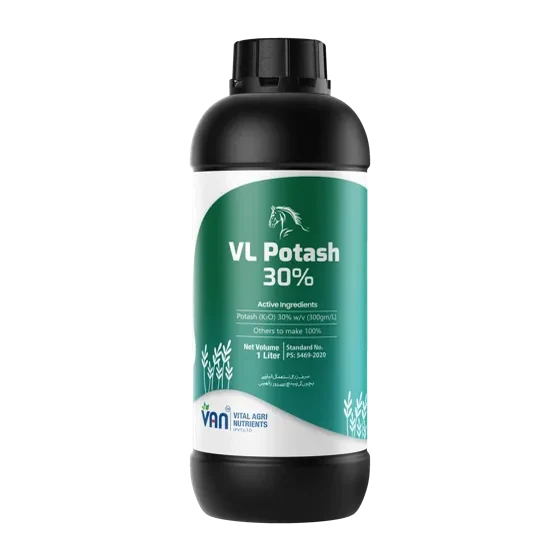
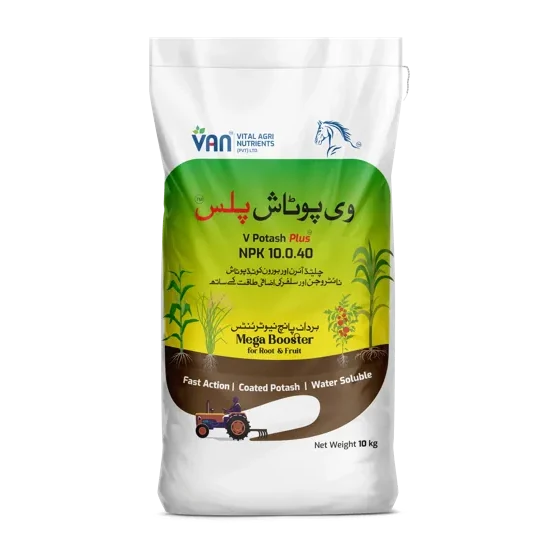
VAN’s potash brands
VAN’s banana plan emphasises potassium (K) and magnesium (Mg). This section shows all of VAN’s potash brands, including those not used in the banana plan. The plan table above shows which brand is used at each stage.
Ask VAN for a plan for your own field
The crop plans on this site are general guides for a typical crop on a typical soil, and they do not replace a soil test. VAN can prepare a plan for your own farm from your soil analysis, your yield target and the other conditions of your field that affect how much fertiliser to apply. Ask for one on WhatsApp or at kisan@van.com.pk.