
Crop Plans / Orchards & fruit / Citrus, 5 years and over
Crop programme · per acreCitrus, 5 years and over
The full stage-by-stage programme is below and in the PDF: what to put on, at which stage, by which method, and the pack it comes in. The nutrition creator further down adjusts it to your soil. Where VAN’s 2 figures differ, both are shown as a range.
When did your season start?
Answer this and the page follows your season, or skip it. Every rate, quantity and method below stays the same.
Every band, every stage.
Every band at every stage, per acre. Grey names are not VAN products, and each VAN product is shown in its real pack.
| Band | Land Preparation | Germination | Early Growth | Grand Growth | Maturity |
|---|---|---|---|---|---|
| Phosphorus | 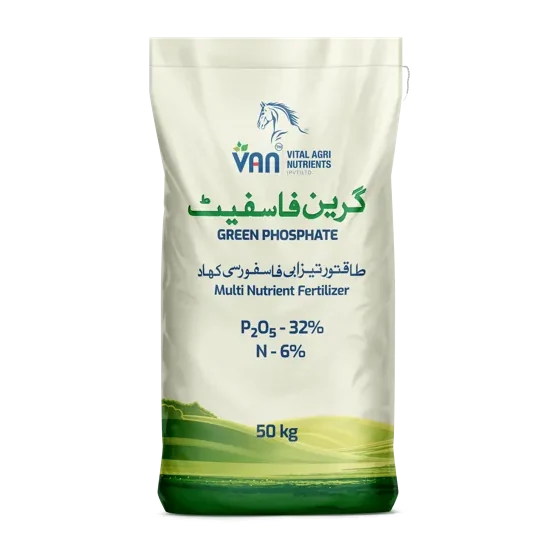 | 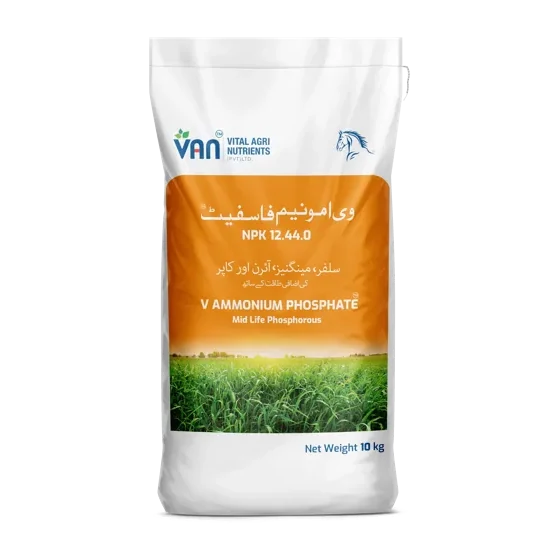 | |||
| Nitrogen | 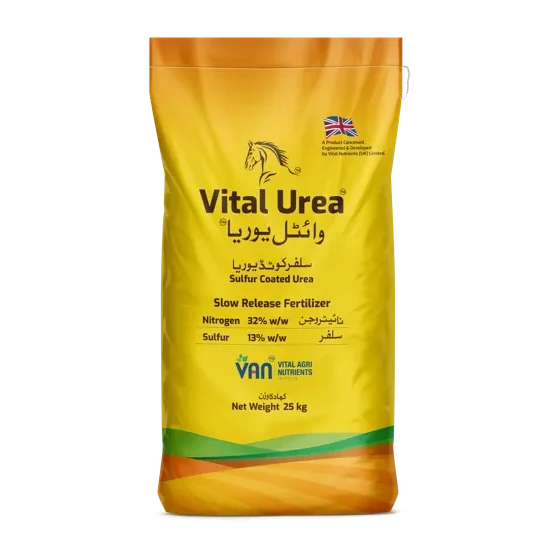 | CAN N 26% · 1 bag · 50 kg Side dressing/Broadcasting | Urea N 46% · 1 bag · 50 kg Fertigation | ||
| Potash | 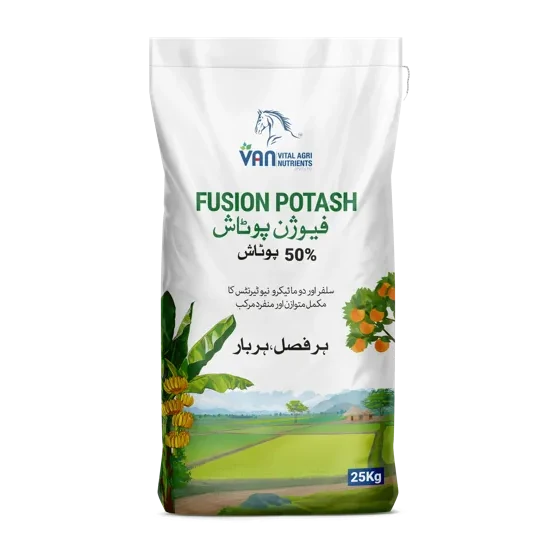 | 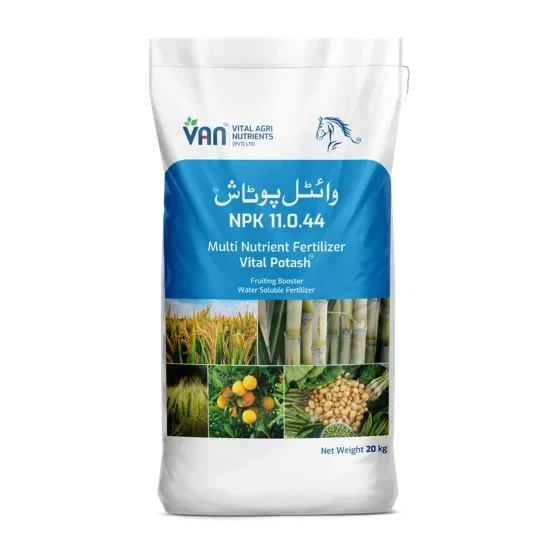 | |||
| Secondary Nutrient | 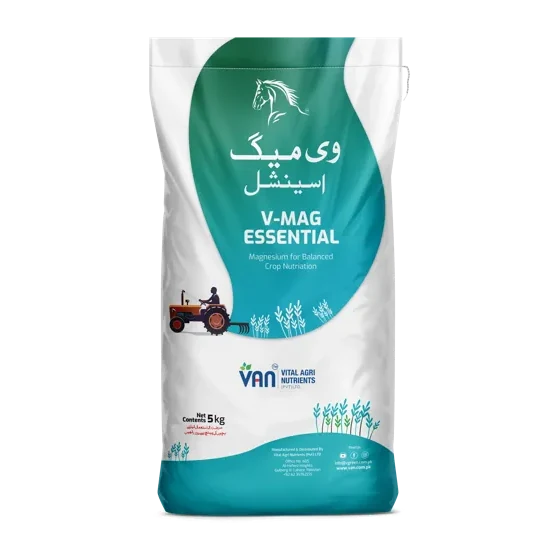 | ||||
| Soil Amendment | 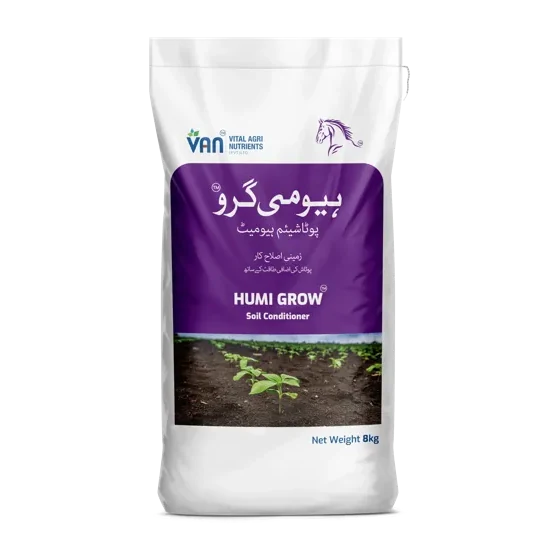 | 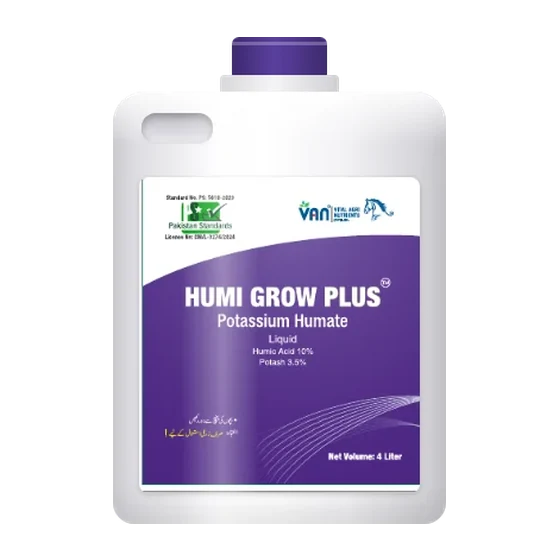 | |||
| Micronutrients | 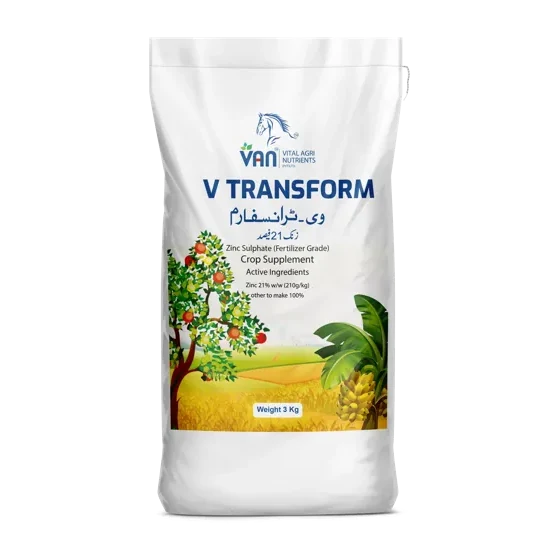 | ||||
| Foliar | 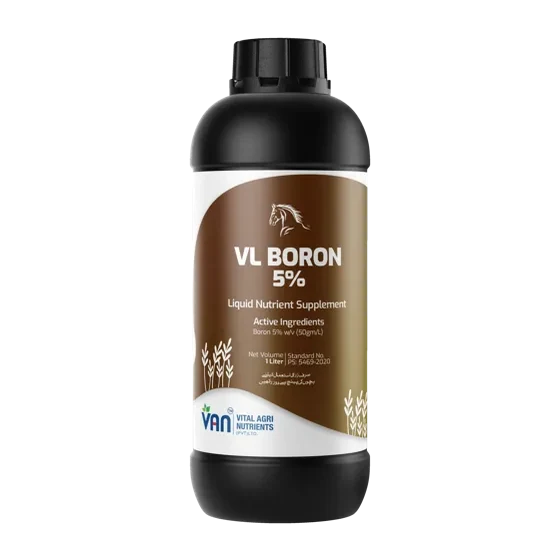 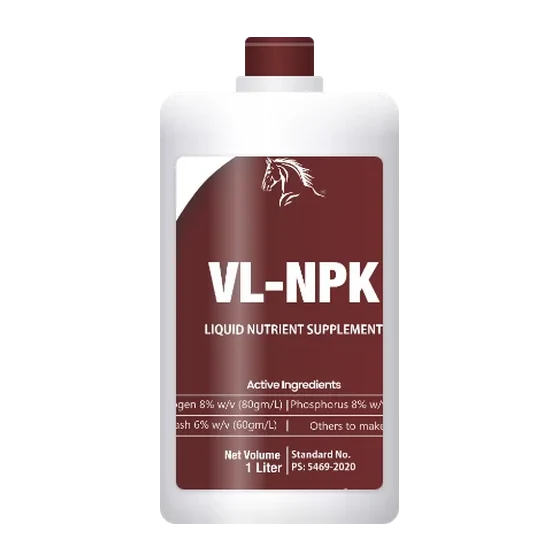 |  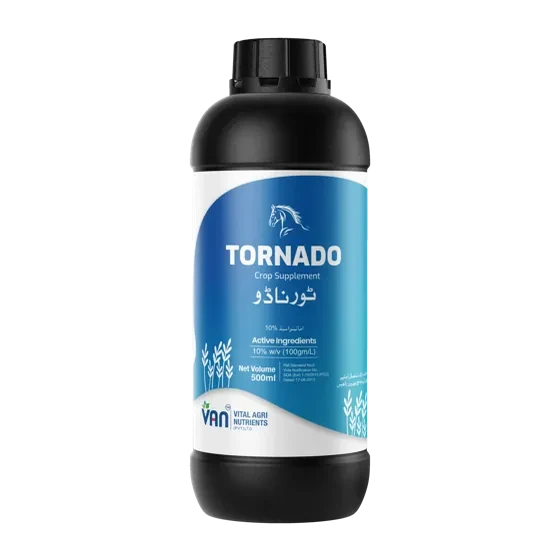 |
What to buy for your acres.
Tick the stages you are planning, set your acres, and this is the citrus programme turned into bags and packs.
Tick the stages. Set your acres. Send the list.
Counts are the published per-acre rates added up across the stages you tick, multiplied by your acres. VAN confirms the final price, availability and delivery on WhatsApp.
- Green Phosphate50 kg bag · Land Preparation1bag · 50 kgYour choice:
Same bag size, different bag. Fusion Phosphate is TSP at 46% P₂O₅. About 44% more phosphate per bag than Green Phosphate’s 6:32:0, and no nitrogen with it. Green Phosphate is the humic-coated acidic grade, built for alkaline ground. The plan’s number of bags does not change if you switch; what you put on the field does. At 50 kg a bag: Green Phosphate 16.0 kg P₂O₅ + 3.0 kg N, Fusion Phosphate 23.0 kg P₂O₅ and no nitrogen.
- V. Ammonium Phosphate (V-Phosphate)10 kg bag · Grand Growth1bag · 10 kg
- Vital Urea25 kg bag · Land Preparation, Germination3bags · 75 kg
- Fusion Potash25 kg bag · Land Preparation1bag · 25 kg
- Vital Potash20 kg bag · Grand Growth1bag · 20 kg
- V-Mag Essential5 kg bag · Germination, Grand Growth1¼bags · 6 kg
- Humi Grow8 kg bag · Land Preparation2bags · 16 kg
- Humi Grow Plus4 L pack · Germination1pack · 4 L
- V-Transform3 kg bag · Germination2bags · 6 kg
- VL-Boron1 L pack · Germinationunder ½pack · 0.2 L
- VL-NPK1 L pack · Germination1pack · 1 L
- Crop Force10 kg bag · Grand Growth1bag · 10 kg
- Tornado0.5 L pack · Grand Growth1pack · 0.5 L
- CAN not a VAN productcommodity input · 50 kg bag · Germination1bag · 50 kg
- Urea not a VAN productcommodity input · 50 kg bag · Grand Growth1bag · 50 kg
The spray rates in this programme are published per 200 litres of water, and are counted as 1 tank of 200 litres an acre. A larger canopy takes more water to cover, so it takes more product. Tell VAN your tree size and spray volume and the count is adjusted.
This sends VAN’s published citrus plan for the stages you ticked. This list is not adjusted for your soil. For that, use the calculator below. Add your district and VAN replies with price and the nearest dealer.
The nutrition creator.
Set your acres and every quantity below scales with it.
Which list to use: the acres figure is shared with the shopping list above. The shopping list is the published plan; this list is VAN’s calculator, and it is the one to use if you have a soil report. Where the 2 differ, the totals below show a range.
Set your acres. Watch the plan scale.
Every quantity below is VAN’s citrus rate, scaled by your acres. Add your soil test below, or just pick your district, to adjust it further.
- Vital Urea25 kg pack375 kg total
- Ureanot a VAN product50 kg pack150 kg total
- V. Ammonium Phosphate (V-Phosphate)10 kg pack110 kg total
- CANnot a VAN product50 kg pack150 kg total
- Green Phosphate50 kg pack150 kg total
- Vital Potash20 kg pack120 kg total
- Fusion Potash25 kg pack125 kg total
- Crop Force10 kg pack110 kg total
- VL-NPK1 L pack11 L total
- VL-Boron1 L pack0.20.2 L total
- V-Transform3 kg pack26 kg total
- V-Mag Essential5 kg pack1.26 kg total
- Humi Grow8 kg pack216 kg total
- Humi Grow Plus4 L pack14 L total
- Tornado0.5 L pack10.5 L total
VAN’s published citrus plan gives the same totals.
Type the number from your soil report, or pick its band, for any of these. The plan above adds product where your land is short. For phosphorus, potash and zinc it cuts the rate by 1/4 where your reading is healthy. Nitrogen is not cut. Leave a row blank if you have no reading for it. This adjustment is a pilot.
VAN confirms the final price, availability and your nearest dealer on WhatsApp.
What the citrus programme puts on your field.
Per acre, across the whole programme. Published rate × the analysis on each row.
Tornado (a bio-stimulant) has no nutrient figure, so it is not counted.
Crop removal figures for citrus are not available. Per-tonne removal figures for orange, tangerine, lemon and grapefruit come from 1 commercial source (Israeli), not from an independent compilation.
How much water the citrus season needs.
A nutrition plan only works if the crop gets its water. Here is what the season needs, what rain normally gives, and what must come from irrigation.
No sowing date given, so this counts from mid-February, the start of VAN’s published window. Give your sowing date at the top and it uses your date instead.
Pick your district and the figures appear. They come from the nearest weather station with published normals; the station and its distance are shown.
- It is not measured with the full equation. FAO’s standard method needs humidity, wind and solar radiation. The Pakistan Meteorological Department normals this tool uses give only temperature and rain, so the reference figure uses Hargreaves, the method FAO gives for this case. It is an estimate.
- It is probably on the low side for Punjab. FAO’s crop coefficients are published for a sub-humid climate. Its own caption says relative humidity around 45% and light wind. Punjab in the dry season is drier and windier than that, and FAO’s own correction for arid climates raises the coefficient. Without humidity and wind data that correction cannot be applied, so the real need is likely higher than the figure above.
- It is what the crop uses, not what you have to pump. Nothing here allows for what a watercourse loses on the way, for water running past the roots, or for the extra needed to leach a salty soil. And the rain shown is all the rain. How much of a July downpour a field actually keeps depends on your soil and your slope.
Method: FAO Irrigation and Drainage Paper 56. Crop evapotranspiration, Table 11 (lengths of crop development stages) and Table 12 (single crop coefficients). Temperature and rainfall: WMO Climatological Standard Normals 1991–2020, Pakistan Meteorological Department. Normals, not this season. What a month is usually like, averaged over 30 years.
Nutrition decides about 1/4 of the yield. Sowing, seed, water, weeds and pests decide the rest. The farm discipline simulator scores a whole season across 10 levers. It covers wheat and potato for now, each with its own levers and its own weights. The tools still coming →
About 1/4 of the nitrogen in the bag feeds the crop. The rest leaves as gas or drains past the root.
Why it goes, what VAN builds against each loss, and the 17 nutrients and the barrel that show where your own season leaks.
The plan names a method for every row.
Broadcasting, placement, side dressing, fertigation and spray are 5 different things. Read what each one means before you open the PDF.
▸ Tap a method to read it
Spread evenly over the soil surface, before or at sowing, and worked in by tillage or by the first irrigation. For a basal granule it is the last choice: drill it if you can.
A separate rule applies to Vital Urea. Vital Urea is a coated slow-release urea and is applied by drilling at sowing (beside and below the seed, never touching it), by side dressing, or by broadcasting, never by fertigation. The fertigation rows in the nitrogen band are commodity urea, which is a different material.
VAN’s micronutrients and secondary nutrients products.
Programme focus: Multi-nutrient (K-Ca-Mg-B). The PDF names which products go on, at which stage. These are the VAN products in those nutrient groups.
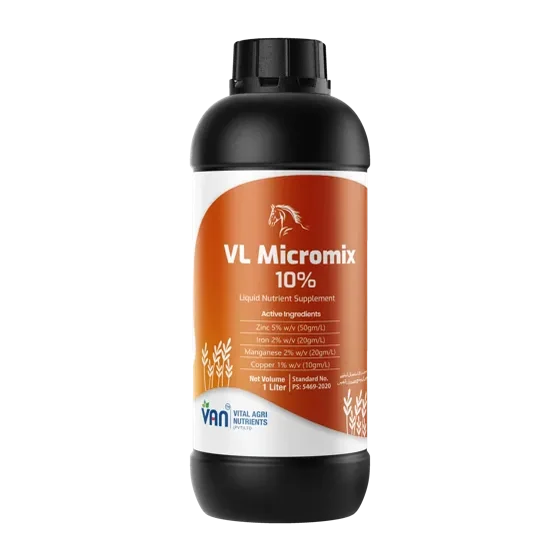
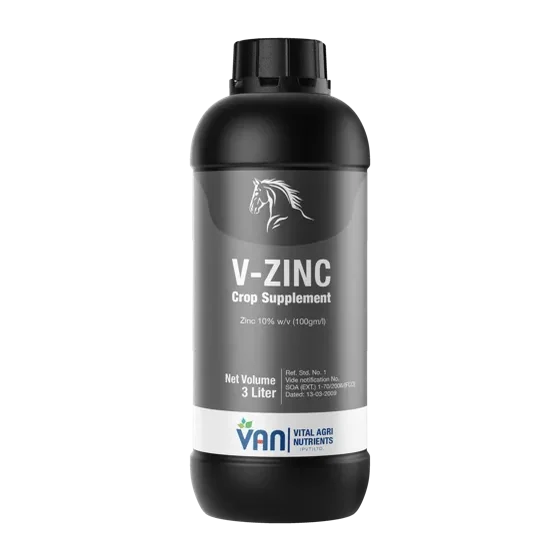
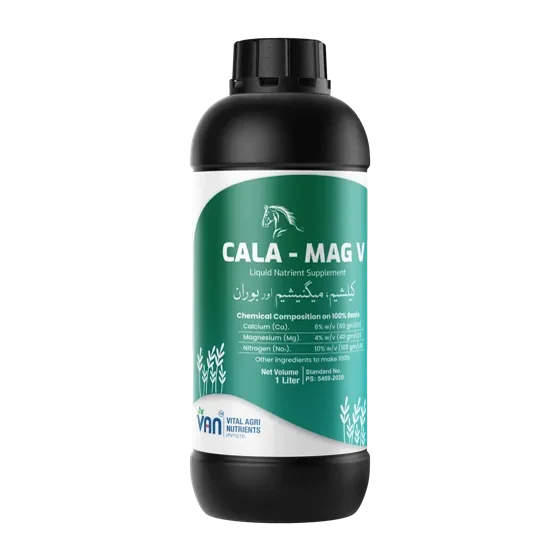
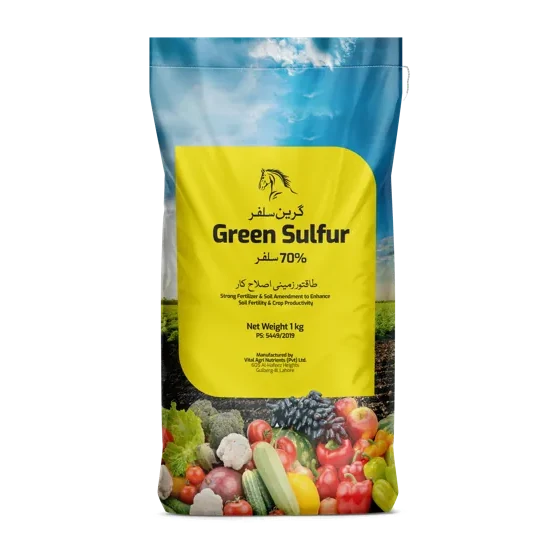
These are per-acre programmes, not a prescription for your field.
A nutrition plan is built on a typical crop and a typical soil. It is not a substitute for a soil test. VAN prepares farm-specific plans against a grower's own soil analysis, yield target and the other variables that decide a rate. Ask for one on WhatsApp or at kisan@van.com.pk.